In a country where Cricket is often described as a religion, Wheelchair Cricket is emerging as one of the most powerful tools of social change.
Wheelchair Cricket is more than just a sport; it is a statement, a challenge to long-held biases, stigma and the idea that disability limits ambition.
Across India, wheelchair cricketers are rewriting narratives of ability every day. When they take the field, people pause, watch, and realise, “Oh, they are playing wheelchair cricket… and they play with the same passion as any other cricketer.” That moment of realisation becomes the first crack in the wall of societal prejudice.
Sport as a Path to Dignity, Confidence and Purpose
For many wheelchair cricketers, the journey begins in childhood, often linked to conditions like polio or accidents. Yet, despite early struggles, they find in sports not just recreation but a sense of identity.
Manohar, a cricketer from Gujarat, shared that he had been with this sport since he was very young, and it has given him confidence, community and a reason to dream. Many players echo the same sentiment- sport gives them the courage to live with dignity and pride.
Changing Perceptions, One Match at a Time
Wheelchair cricket plays a vital role in breaking misconceptions about disability. Spectators, often watching the sport for the first time, are amazed by the athleticism, skill and competitiveness on display.
Ashok, Vice-captain of the Mumbai wheelchair team, explained that when wheelchair athletes watch normal cricket, “they feel the same passion and they believe they are not less than any other cricketer.” That belief is the driving force of the community.
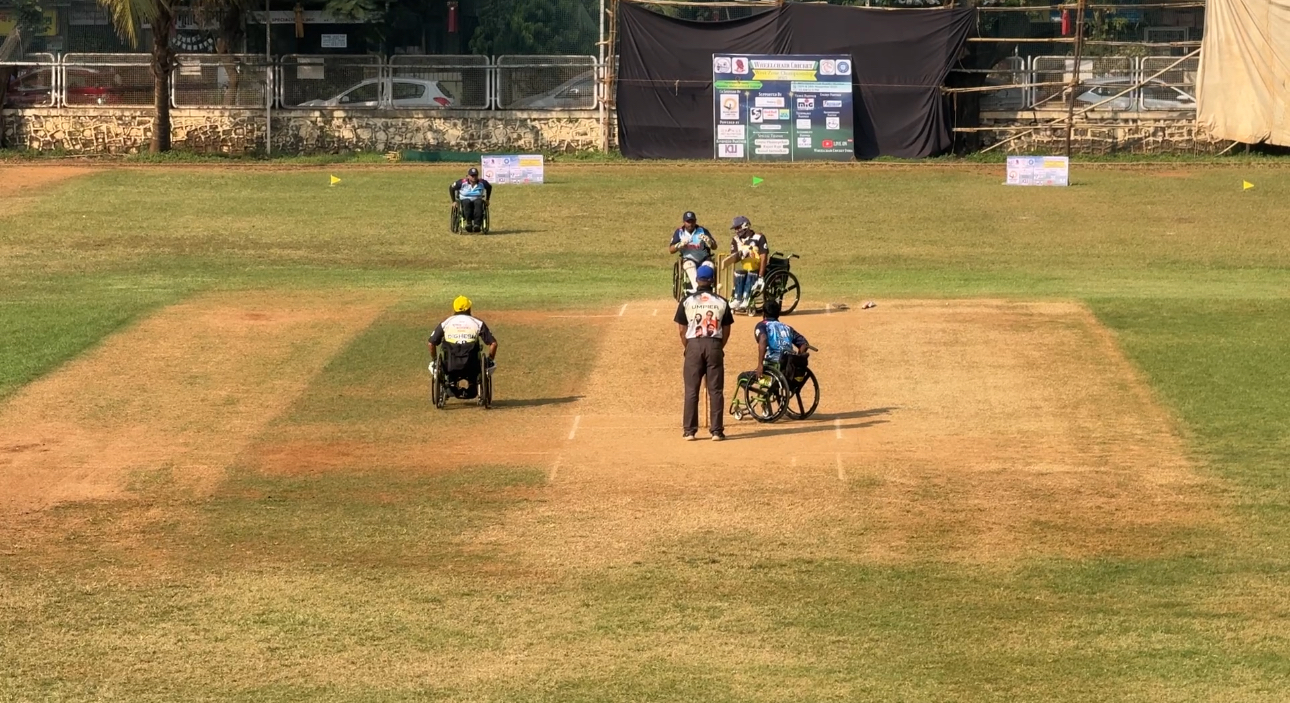
Events like the Wheelchair Cricket West Zone Championship 2025, hosted at MIG Cricket Club in Bandra, help accelerate this awareness. With teams from Mumbai, Gujarat and Maharashtra participating, the tournament became a celebration of talent, resilience and determination.
Building a Culture Where Every Athlete Belongs
Despite the passion, perseverance and professionalism of these athletes, wheelchair cricket still struggles with systemic challenges.
Lack of Infrastructure
Players often share that they do not get access to proper grounds, wickets or pitches. Some venues even worry that wheelchairs might damage the turf, a misconception that continues to restrict the sport.
Limited Equipment and Resources
Many athletes do not have proper sports wheelchairs or kits. One player admitted, “We don’t even have enough wheelchairs. Practice matches happen less. But we still keep going.”
Need for Institutional Support
Although BCCI has provided affiliation, players say funding has not yet reached them. They know that if official support comes, wheelchair cricket can transform from an inspirational movement to a professional pathway.
As Vishwanath Gurav said, “Once the BCCI funding starts to come, the perception will change. At that time, every department will get separate funding, and it will be easier for us to organise tournaments like this.”
Every Match Is a Statement of Equality
Wheelchair cricket is played with modified rules, such as an 18-yard pitch, slightly shorter boundaries, and a rule that no body part should be below the wheelchair while playing. Yet despite these changes, the spirit, aggression, and hunger to win remain identical to those of mainstream cricket.
Teams are built based on disability points and WCIA or BCCI guidelines, ensuring fairness, diversity and representation of all types of disabilities. Every disability has a place. Every athlete has a role.
Families, Communities and Organisations Are the Backbone
For many players, family is their biggest support system. Families sitting in the crowd at MIG, cheering their loved ones on, symbolise the emotional side of adaptive sports. It is a shared journey of overcoming and belonging.
Grounds like MIG Cricket Club opening their facilities free of cost, NGOs, well-wishers, political supporters and volunteers contribute to the ecosystem that keeps wheelchair cricket alive.
A New Generation of Role Models
India’s wheelchair cricketers are quietly becoming icons of inclusion.
A Mumbai wheelchair player, Tejas Relekar, explained that these cricket teams are formed to inspire every aspiring athlete to feel represented. His message captures the heart of the movement:
“We are differently abled, not disabled.”
The Way Forward- Awareness, Accessibility and Acceptance
Public understanding must grow to challenge outdated perceptions and recognise wheelchair cricketers as skilled athletes. Corporate and government support is crucial for better equipment, coaching and financial stability, while increased media visibility can spotlight their stories of grit and excellence.
Most importantly, wheelchair cricket must be fully integrated into national and international para-sport systems. True inclusion will be achieved when society sees these players not as exceptions, but as professional athletes.
Wheelchair cricket stands at the intersection of sport and social justice. Every time an athlete pushes the wheels of their chair across the ground, every boundary they hit, every catch they take, challenges the world to rethink disability.
This sport proves that ability is not defined by limbs but by spirit. If India truly believes in the power of sports, wheelchair cricket deserves not just applause but investment, visibility and unwavering support.
Inclusion is not charity; it is a right.