The Right Pitch is using Cricket to engineer transformation. What began as a classroom experiment has evolved into a powerful sports-for-development movement.
In the densely populated precincts of Malad-Malvani in Mumbai suburbs where economic precarity, social conservatism and institutional neglect often intersect, Fiza Ansari once imagined her future within narrowly prescribed boundaries. Raised in a conservative Muslim household, Fiza grew up believing that education, while important, would ultimately culminate in domestic responsibility and early marriage. Sport, particularly for girls, occupied no legitimate space within that social imagination.
 Yet today, Fiza Ansari serves as the Maharashtra State Associate of The Right Pitch, a sports-for-development initiative that has emerged as a compelling model for educational and social transformation through Cricket. Her journey encapsulates not merely personal emancipation, but the broader emancipatory potential of sport when strategically embedded within marginalised communities.
“I was an average student in school,” Fiza reflects. “Though I studied well, I believed that eventually I would have to marry after completing my education. But The Right Pitch showed me another future.”
Fiza’s narrative functions as a profound case study in the sociology of sport and gender. Her introduction to The Right Pitch in 2018 occurred when Subhankar Paul, then a Teach For India fellow, initiated sporting interventions within her school.
Initially inducted into the Football team, Fiza Ansari soon gravitated towards Cricket after observing boys participating in The Right Pitch programme. However, participation demanded negotiation not merely with circumstance but with entrenched patriarchal norms. Convincing her family proved arduous. She candidly acknowledges that she initially resorted to deception simply to access training opportunities.
Gradually, however, sporting participation began to alter familial perceptions. Her parents relented under stringent conditions- she would continue her academic responsibilities, complete domestic chores and only then pursue Cricket. This conditional acceptance illustrates the layered realities confronting young girls in underrepresented communities, where aspirations are often mediated through gendered expectations of obedience and domesticity.
Yet sport became transformative precisely because it transcended recreation. Through Cricket, Fiza developed confidence, leadership capabilities and a coherent sense of selfhood. “The meaning of my name is ‘Hawa’,” she says poetically. “And this wind blows positively because of The Right Pitch.” Her evolution from a hesitant schoolgirl to a state-level programme associate underscores how sport, when coupled with mentorship and institutional support, can generate substantive social mobility.
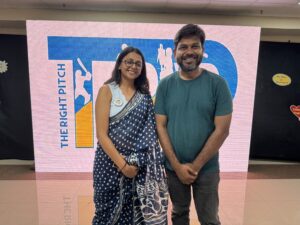 At the heart of this transformation lies the vision of Subhankar Paul, whose pedagogical experiment in Govandi eventually evolved into one of India’s most compelling grassroots sports initiatives.
More than a decade ago, Subhankar entered Govandi through the Teach For India fellowship programme and encountered a familiar crisis within urban public education- student disengagement.
Conventional classroom methods were failing to retain attention or inspire participation. Many students displayed disruptive behaviour, irregular attendance and minimal emotional investment in formal learning. Yet amidst this educational disaffection, Subhankar identified an intriguing contradiction. Children who were combative and inattentive inside classrooms exhibited remarkable cooperation and emotional regulation while playing improvised cricket with paper balls and hardbound notebooks.
“I found that the same students who fought inside the classroom were working together as a team while playing,” Subhankar recalls.
This observation proved seminal. Cricket had profoundly influenced Subhankar’s own psychosocial development, transforming him from a diffident child into someone capable of leadership, communication and independent thinking. Recognising sport’s latent pedagogical potential, he devised an incentive-based intervention- students who attended school regularly, completed assignments and refrained from bullying would earn points redeemable for weekend cricket sessions.
The outcome was immediate and striking. Attendance improved, behavioural disruptions diminished and classroom engagement increased substantially. “It worked like magic,” he remarks.
However, what distinguished his intervention from simplistic reward systems was his subsequent conceptual expansion of sport itself. He recognised that Cricket could function not merely as motivation for academic compliance but as a medium for cultivating life skills, emotional intelligence and leadership capacities among children from structurally disadvantaged backgrounds. From this realisation emerged The Right Pitch—an organisation dedicated to building student leadership through sport among children aged eight to fifteen from underrepresented communities.
Over the past decade, the initiative has impacted more than 10,000 children across India. Under the stewardship of CEO Pallavi Kejriwal during the last five years, the programme has expanded from Maharashtra into states such as Himachal Pradesh, Uttar Pradesh and Tamil Nadu, collaborating extensively with government and low-income private schools.
Pallavi articulates the organisation’s philosophy with striking clarity: “The Right Pitch is building 21st-century life skills in children using Cricket as a tool. Cricket is a unifying religion in India. It breaks barriers and celebrates diversity.”
This assertion is particularly significant within the Indian socio-cultural context, where Cricket possesses unparalleled symbolic capital. The Right Pitch strategically harnesses this cultural ubiquity to foster educational engagement and social cohesion. Its curriculum integrates sport with the “Four Cs” central to contemporary educational discourse—collaboration, critical thinking, communication and creativity—aligning closely with the objectives of India’s National Education Policy.
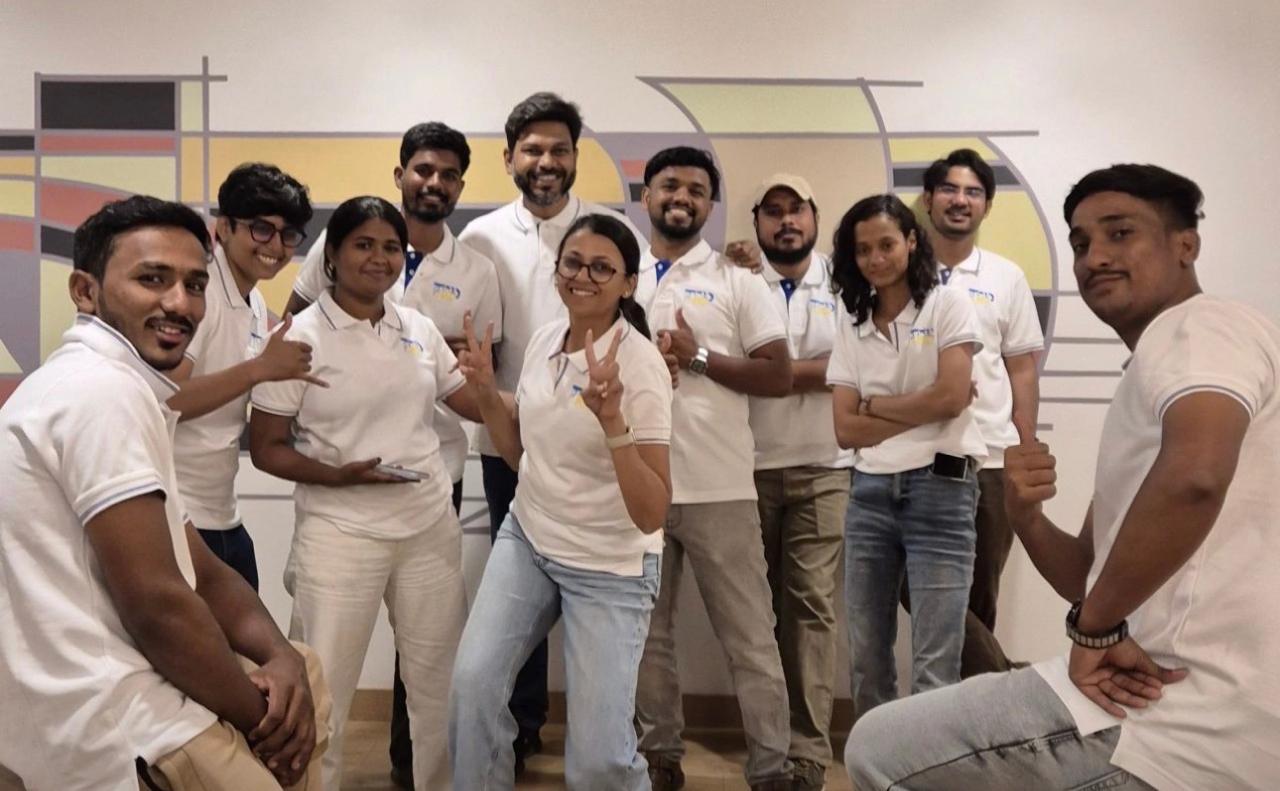
Importantly, the initiative does not treat coaching as a purely technical exercise. Rather, it conceptualises sport as an experiential learning ecosystem. Coaches are recruited directly from the communities they serve, ensuring cultural proximity and emotional relatability. Many are themselves alumni of the programme, thereby establishing an intergenerational cycle of mentorship and social reinvestment.
“The children look up to the coaches because they come from similar backgrounds,” Pallavi explains. “They become role models.”
This community-centric framework distinguishes The Right Pitch from conventional sports academies. It acknowledges that sustainable social transformation requires local legitimacy and relational trust. Consequently, the organisation extends its engagement beyond students to include parents, schools and neighbourhood ecosystems. What emerges is not simply a coaching programme but a participatory social movement centred on aspiration and inclusion.
Initially, many school administrators viewed the initiative instrumentally as a means to enhance enrolment figures or provide affordable cricket exposure. Yet over time, they began to witness more profound behavioural and psychological changes among students. Parents, too, experienced perceptual shifts as children gained access to stadiums, tournaments and interactions with professional cricketers—experiences previously unimaginable within their socioeconomic realities.
“These children are now meeting their role models in real life and not just seeing them on television,” says Subhankar. “That creates hope for the future.”
Nevertheless, the programme’s operational realities remain complex. Access to safe sporting infrastructure continues to be a formidable challenge. Many schools lack playing grounds entirely, compelling the organisation to rent nearby public spaces and cultivate relationships with local municipal authorities. In states such as Uttar Pradesh, the organisation increasingly prioritises schools possessing on-campus facilities to reduce logistical and safety constraints.
Simultaneously, The Right Pitch has embraced technological and institutional innovation to scale its impact. A recently developed digital application enables students and parents to monitor individual progress transparently, while partnerships with governmental agencies and organisations such as the MCC Foundation in the United Kingdom have strengthened pedagogical and administrative capacities.
Yet perhaps the organisation’s most consequential intervention lies in its commitment to gender inclusion. “Every school should have at least one girls’ team,” Subhankar asserts.
This ambition carries significant sociological weight. In many conservative communities, girls’ participation in sport remains constrained by anxieties surrounding safety, propriety and mobility. Recognising these barriers, The Right Pitch has consciously invested in recruiting female coaches, conducting child protection and POCSO awareness training, implementing safety-circle education and exploring counselling support mechanisms.
Such interventions reflect a sophisticated understanding that empowerment cannot emerge solely through participation metrics. Rather, it requires the creation of psychologically safe and socially legitimised environments where young girls can exercise agency without fear.
In contemporary India, discussions surrounding sport are frequently dominated by elite performance, commercial leagues and medal-oriented nationalism. Against this backdrop, The Right Pitch represents an alternative paradigm—one that locates the value of sport within human development rather than spectacle.
Cricket here is not merely a competitive activity; it is a mechanism of social inclusion and a language through which dignity is restored to communities historically excluded from opportunity.
Ultimately, the significance of The Right Pitch lies not in producing professional cricketers, though some participants have indeed progressed to state-level competition. Its deeper achievement resides in producing socially confident individuals capable of imagining futures beyond structural limitation.