
A game of speed, skill, and relentless intensity, Lacrosse is often described as one of the fastest sports. Yet beyond its pace lies a deeper story- one that spans centuries, cultures, and continents.
Origin- The Creator’s Game
Lacrosse traces its origins to indigenous communities of North America as early as the 12th century. For those communities, the sport was far more than recreation. It was a spiritual ritual, often referred to as “The Creator’s Game,” played to honour traditions, build community bonds, and prepare young men for warfare.
Matches could stretch across vast landscapes and last for days, involving hundreds of players. The game symbolised endurance, unity, and resilience- values that continue to resonate in modern Lacrosse.
The sport began its transformation in the 19th century when it was formalised in Canada. The establishment of the Montreal Lacrosse Club marked a turning point, introducing structured rules and organised competition. From there, Lacrosse gradually expanded beyond North America, setting the stage for its global journey.
Olympic Legacy and Global Expansion
Lacrosse was included in the Olympic Games in 1904 and 1908. Although it later disappeared from the Olympic programme, the sport continued to grow worldwide.
Today, Lacrosse is played in over 90 countries, making it one of the fastest-growing sports globally. Its return to the Olympics at the Los Angeles 2028 Games in a new, faster “Sixes” format marks a historic moment.
This revival is not just symbolic—it represents an opportunity for emerging nations like India to establish themselves on the global stage.
Understanding the Game: Rules and Equipment
At the heart of Lacrosse is a unique combination of speed, strategy, and skill. The game is played using a stick called a crosse, which features a netted head used to catch, carry, and pass the ball. The ball itself is small, solid, and can travel at remarkable speeds, making control and precision essential.
Players wear varying levels of protective equipment depending on the format. In Men’s Lacrosse, helmets, gloves, shoulder pads, and arm guards are mandatory due to the physical nature of the game. Women’s Lacrosse, on the other hand, involves less physical contact, requiring only protective eyewear and mouthguards.
The primary objective is simple- score goals by shooting the ball into the opponent’s net. However, the execution demands agility, coordination, and tactical awareness. Players must move the ball quickly across the field, combining swift passes with strategic positioning.
Men’s and Women’s Lacrosse differ significantly in rules. The Men’s game allows body contact and stick checking, making it more physical, while the Women’s game emphasises finesse, positioning, and speed under stricter contact rules.
Despite these differences, both formats require qualities that define the sport’s dynamic nature, like exceptional stamina, teamwork, and split-second decision-making.
The Indian Journey: A Sport Takes Root
In India, Lacrosse is still in its early stages, but its growth has been both rapid and promising. For many athletes, the sport serves as a natural extension of more familiar disciplines.
Sunita, captain of the Indian women’s team, shares her journey. She said, “I used to play hockey and handball. My coach told me Lacrosse is similar and that I could do well in it. So I joined, and continued pursuing it.”
Her story reflects a broader trend, with athletes transitioning from sports like hockey, leveraging their existing skills to adapt to Lacrosse.
What was once an unfamiliar sport is now steadily gaining recognition across the country. National tournaments see participation from 22 to 25 states in both Men’s and Women’s categories. Each state now has approximately 200 to 300 active players, indicating a growing grassroots presence.
Building the Ecosystem
The development of Lacrosse in India has been driven by structured efforts from the Lacrosse Association of India. Led by Member of Parliament Ravi Kishan, the association has focused on building infrastructure, organising competitions, and providing essential resources.
“We are getting proper help,” says Sunita. “They are providing us with equipment and organising events. Nationals happen in Agra, Gorakhpur, and Udaipur, along with federation and international competitions.”
Regular national championships and exposure to international coaching have significantly improved the standard of the game. Training camps featuring foreign coaches are helping Indian players understand global techniques and strategies, bridging the gap between domestic and international competition.
Historic Triumph: Gold in Riyadh
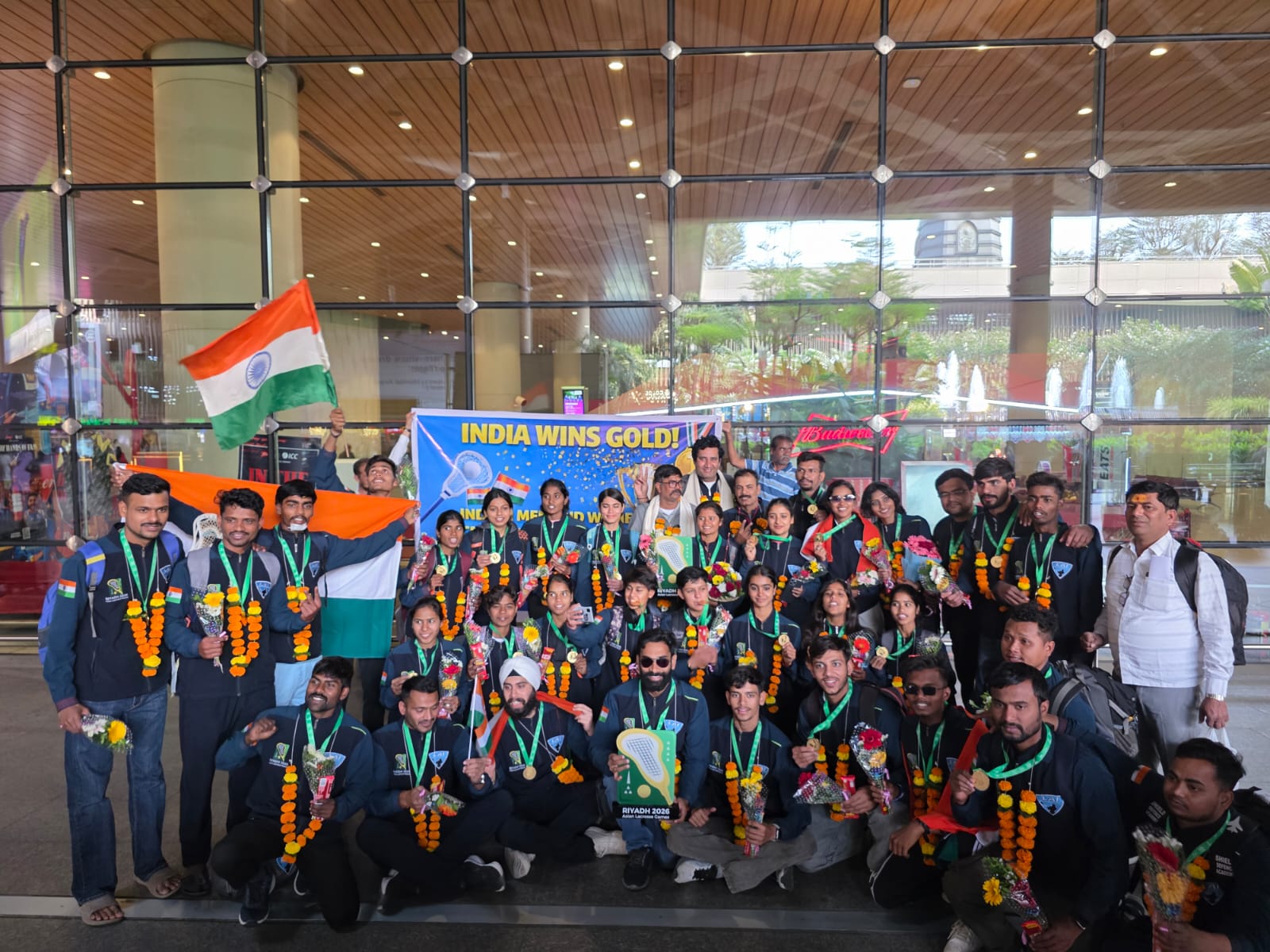
India’s efforts bore remarkable fruit at the Asian Lacrosse Championship in Riyadh. In a historic achievement, both the Men’s and Women’s teams secured gold medals, marking a defining moment for the sport in the country.
“Getting a gold medal in both formats at the same tournament is very rare, especially for India,” says Anudeep, captain of the Indian Men’s team.
For the players, the victory was deeply emotional. Sunita recalls, “When the national anthem played, we all had tears in our eyes. For any athlete, winning gold for the country is the highest achievement.”
This dual triumph not only elevated India’s standing in Asian Lacrosse but also signalled its potential on the global stage.
Challenges and Determination
Despite the progress, challenges remain. Many players, particularly from rural regions such as Rajasthan, continue to train with limited facilities and resources. Yet, their determination remains unwavering.
“These players come from rural backgrounds with minimal facilities, but they are motivated,” Sunita explains. “They know they are making their families proud through this sport.”
This resilience is perhaps the most defining feature of Indian Lacrosse today. This is a sport growing not just through infrastructure, but through sheer passion and perseverance.
The Road Ahead: Olympic Aspirations
With Lacrosse set to return to the Olympics in 2028, India’s ambitions have grown significantly. The focus is now on qualification, backed by increased training camps, international exposure, and a steadily expanding talent pool.
“We are working towards more exposure and better preparation,” says Anudeep. “Foreign coaches and national camps are helping us move closer to that goal.”
The road to the Olympics will not be easy, but the foundation is being laid. With continued support and sustained development, India has the potential to emerge as a competitive force in the sport.
A New Sporting Chapter for India
As the world rediscovers Lacrosse, new nations are stepping forward, bringing fresh energy and ambition to the game. Among them, India stands ready- not just as a participant, but as a contender.
From its sacred origins to its modern resurgence, Lacrosse represents more than just a sport. It is a story of evolution, opportunity, and aspiration. And in India, that story is only just beginning.